
Search has been structurally reimagined. The old playbook — publish a page, rank for a keyword, get a click — is giving way to something far more complex. AI-powered discovery surfaces like Google AI Overviews, ChatGPT, and Perplexity now handle discovery, comparison, and increasingly, transactions. The brands that understand this shift and act now will compound their advantage. Those that wait will find themselves invisible.
This isn't a prediction about the future. It's a description of what's already happening. And for businesses serious about growth, the strategic response is clear: invest in content velocity now, before the window closes.
SEO Isn't Dead - It's Split in Two
There's a persistent myth that SEO is dying. It isn't. But it has fundamentally bifurcated into two distinct strategic problems that require different thinking.
The first is traditional SEO: optimising for humans who browse, compare, and buy. This remains essential. Organic search still drives enormous traffic, and the fundamentals — technical health, quality content, authoritative backlinks — haven't gone anywhere.
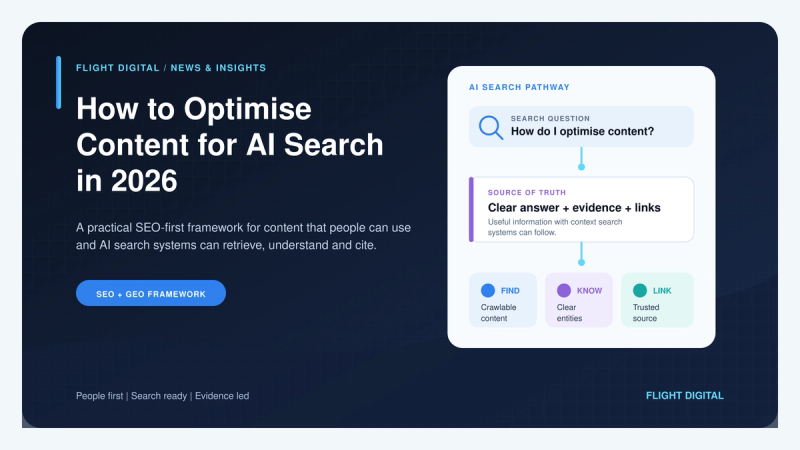
The second is AI search optimisation: supplying clean, trusted, machine-readable information that AI agents can extract and cite — often without a user ever visiting your site. This is a different problem entirely. It's about structured data, content hierarchy, topical authority, and being the source that AI systems trust enough to surface.
The debate about whether AI search matters is over. 810 million people use ChatGPT daily. Google AI Overviews reaches 1.5 billion monthly users. These aren't emerging channels — they're the primary discovery layer for a significant and growing share of the internet. Winning in search today means addressing both problems simultaneously.
The Rise of Agentic Search
AI is no longer just an answer engine. It's becoming an executive assistant — one that can find products, compare options, apply coupons, and execute purchases within a single conversation. This is agentic AI, and it represents a fundamental shift in how transactions happen online.
For brands, the implication is stark: optimising for machine readability and API compatibility is no longer optional. If an AI agent can't parse your content, pricing, or availability in real time, you simply won't exist in this new transaction layer. You won't be compared. You won't be recommended. You won't be purchased.
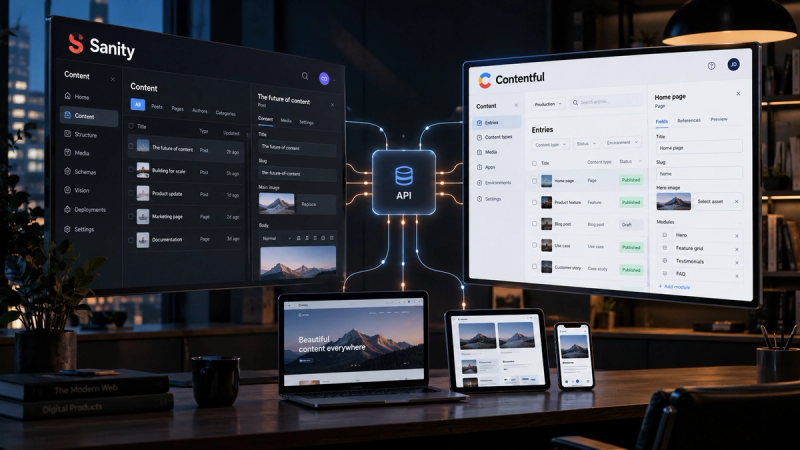
Structured data, clear content hierarchy, and machine-readable information are now table stakes. Brands that have invested in headless CMS architecture and clean content models are already better positioned for this shift — their content is structured, portable, and consumable by systems beyond the browser. Those still relying on monolithic, unstructured web pages face a growing disadvantage that compounds over time.
Why Content Velocity Is the Right Bet Right Now
Content velocity is often misunderstood as "publish more." In reality, it's the rate at which your brand earns topical completeness — the depth and breadth of coverage within a subject area that signals genuine authority to both search engines and AI systems.
AI systems evaluate patterns, not just pages. A brand that publishes deeply and consistently within a category sends a clear signal: "This company actively owns this conversation." A brand that publishes sporadically sends the opposite: "This was a one-time campaign." That distinction increasingly determines:
- Inclusion in AI-generated answers and summaries
- Crawl prioritisation by search engine bots
- Long-tail keyword capture across the full topic cluster
- Category association — being the brand that "owns" a topic in the minds of both users and algorithms
Velocity builds the semantic map that search systems rely on. It's not about gaming an algorithm — it's about demonstrating, through consistent action, that your brand is the most credible voice in a given space.
Proprietary Data and Original Perspective Are Your Moat
As the web floods with AI-generated content, the value of human experience, original research, and owned data rises sharply. This is one of the most important strategic realities of the current moment.
If an AI can synthesise your content without needing to cite you, the underlying value is interchangeable. Your content becomes raw material for someone else's answer. But when you own unique data — a proprietary index, original survey findings, real client outcomes, documented case studies — attribution becomes unavoidable. AI models can't replicate what they can't find elsewhere.
This is why the most forward-thinking brands are investing in original research, detailed case studies, and thought leadership that reflects genuine expertise and lived experience. Not because it performs well in a traditional SEO sense — though it does — but because it creates content that AI systems must cite rather than simply absorb. Originality is no longer just a quality signal. It's a competitive moat.
Content Freshness and Maintenance - The Disciplines Most Teams Skip
Velocity builds presence. Freshness proves you still deserve consideration. These are two different disciplines, and most content teams are only doing one of them.
AI-driven search environments heavily weight recency because they're designed to minimise outdated information. Content decay is real and silent — pages lose rankings not because competitors wrote better content, but because they kept theirs current. Statistics go stale. Industry context shifts. What was accurate eighteen months ago may now be misleading. And search systems, both traditional and AI-powered, are increasingly good at detecting this.
A meaningful content strategy isn't just about publishing new material — it's about maintaining what you've already earned. That means scheduling regular content audits, updating statistics and examples, refreshing internal links, and retiring or consolidating pages that no longer serve a purpose. Treat your content library as a living product, not a campaign archive. The brands that do this consistently will hold rankings that others quietly lose.
The Window Is Now - Organic Visibility Today Becomes Dominant Position When Ads Arrive
Here's the strategic reality that most brands are missing: AI search platforms are currently organic and largely unsponsored. That won't last.
Google already runs ads in AI Overviews across 12 countries. ChatGPT's CFO has publicly confirmed that advertising is coming. The commercial layer is being built right now, and when it opens fully, the brands with established organic authority will hold the dominant position — just as early Google organic rankings translated into lasting brand equity that paid search could never fully replicate.
The window to build that position without paying for it is closing. Brands that invest in content velocity and topical authority now are effectively acquiring prime real estate before the market prices it in. Those that wait will find themselves bidding for visibility they could have earned.
The Future of SEO Rewards Consistency, Depth, and Genuine Expertise
The brands that will dominate search visibility in the next three to five years aren't the ones with the biggest ad budgets or the cleverest technical hacks. They're the ones building content engines that compound — publishing consistently, maintaining rigorously, and grounding their authority in genuine expertise and original insight.
It's not about gaming algorithms. It's about becoming the most useful, trustworthy, and well-maintained source of knowledge in your category. That's what AI systems are designed to surface. That's what users trust. And that's what converts.
For businesses serious about growth, now is the time to build that content engine. Flight Digital helps ambitious brands do exactly that — from content strategy and headless CMS architecture to ongoing content operations. If you're ready to stop treating content as a campaign and start treating it as infrastructure, let's talk.